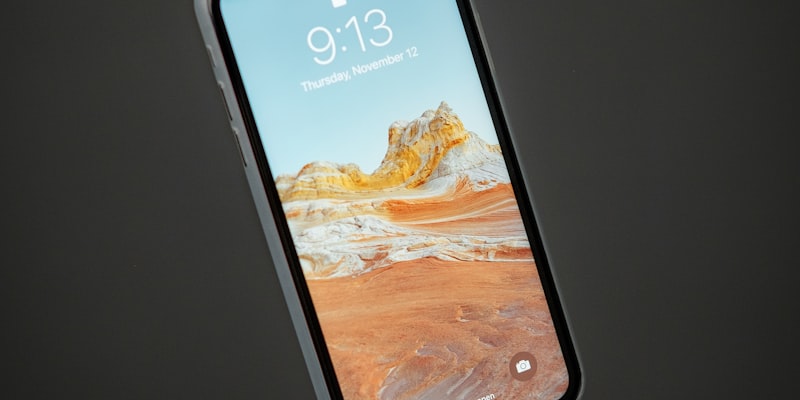
When Apple announced that the iPhone 15 Pro would use a titanium frame instead of stainless steel, the material choice was treated as a headline feature. Tim Cook called it the most significant structural change to the iPhone in years. Reviewers weighed the devices on precision scales. Commentators debated whether Grade 5 titanium was overkill for a phone. Two generations later, with titanium now established as the defining material of the Pro lineup, it is worth stepping back to understand why Apple made the switch and what it signals about where iPhone industrial design is heading.
The Weight Problem
The simplest explanation for the titanium switch is weight. The iPhone 14 Pro Max weighed 240 grams, making it one of the heaviest mainstream smartphones on the market. That weight came primarily from the stainless steel frame, which Apple had used on its premium iPhones since the iPhone X in 2017. Stainless steel is dense, hard, and polishes to a mirror finish, but it is heavy. As screen sizes grew and battery capacities increased, the steel frame became an increasingly significant contributor to a device that was already pushing the limits of comfortable one-handed use.
Titanium offered a way out. Grade 5 titanium (Ti-6Al-4V, the specific alloy Apple uses) has roughly 55 percent of the density of stainless steel while maintaining comparable strength. The iPhone 15 Pro Max came in at 221 grams, a 19-gram reduction that was immediately noticeable in hand. Nineteen grams does not sound like much in isolation, but when distributed across a device that sits in your hand for hours a day, the difference in perceived heft is significant. Apple had found a way to make its largest phone feel lighter without compromising structural rigidity.
Texture and Finish
Beyond weight, titanium brought a different tactile quality. Where polished stainless steel was slippery, reflective, and prone to fingerprints, Apple's brushed titanium finish is matte, slightly textured, and far more resistant to smudges. The surface treatment uses a combination of physical vapour deposition (PVD) coating and a micro-blasted texture that gives the metal a warmth that stainless steel lacked. It feels less like a consumer electronics product and more like a precision instrument.
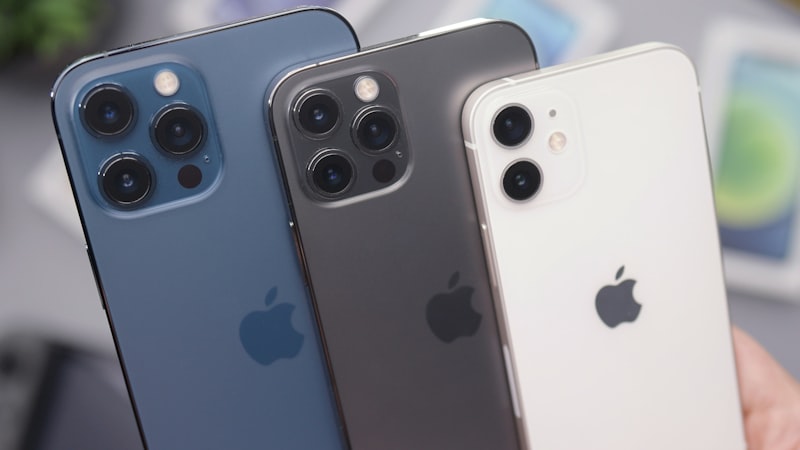
Materials tell the story of iPhone's design evolution
This was not accidental. Apple's design team has spoken about wanting the Pro lineup to feel like professional tools rather than luxury objects. The shift from mirror-polished steel to matte-brushed titanium is a material expression of that intent. It is a move away from ostentation and toward understated durability, a design philosophy more aligned with a high-end watch case than a jewelry store display.
Engineering Challenges
Titanium is not an easy material to work with. It is notoriously difficult to machine: it is abrasive on cutting tools, it does not dissipate heat well during machining, and it tends to gall (stick to tools) at high temperatures. Apple reportedly invested heavily in new CNC machining processes and tooling materials to achieve the tolerances required for iPhone production volumes. The titanium frame is also bonded to an internal aluminium substructure using a solid-state diffusion process, which joins the two metals at the atomic level without adhesive. This dual-material approach gives the frame the exterior properties of titanium with the thermal conductivity and machinability advantages of aluminium where they are needed internally.
The cost of titanium as a raw material is higher than stainless steel, but the greater expense lies in the machining. Apple's willingness to absorb these manufacturing costs reflects the company's view that materials are not just functional choices but design statements. Every material Apple has used for the iPhone frame -- aluminium, stainless steel, titanium -- has defined the character of its era.
What Comes After Titanium
The question of what follows titanium is particularly interesting in light of the rumored foldable iPhone. A folding device imposes different structural requirements than a slab phone. The hinge mechanism must be rigid yet articulating. The fram
Materials tell the story of iPhone's design evolution
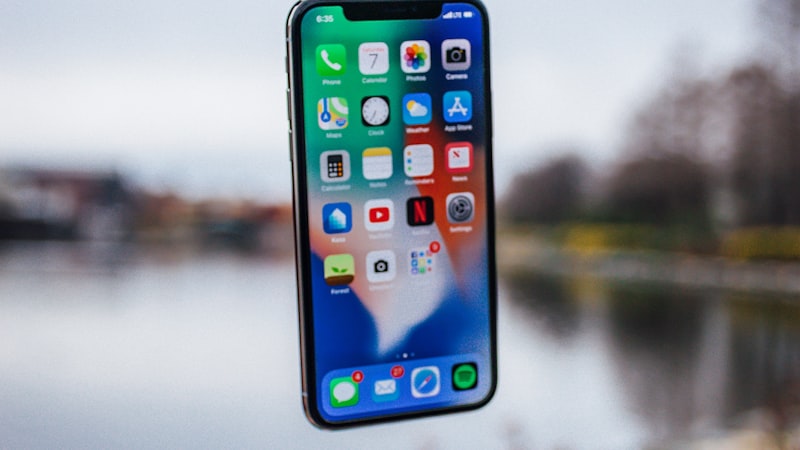
From rounded edges to flat sides — design decisions that defined eras
Titanium is a strong candidate for a foldable iPhone frame, but it may not be used uniformly. Apple could employ titanium for the hinge mechanism and outer spine where rigidity matters most, while using lighter materials like aluminium or even carbon-fibre-reinforced polymer for the two display housings. Patent filings suggest Apple has been experimenting with composite structures that layer different materials to optimize strength-to-weight ratios at different points in the device.
Whatever Apple chooses, the titanium era established a principle that will carry forward: the material is the design. Not a coating, not a colour option, but the fundamental substance of the object. That philosophy will shape every iPhone that follows, foldable or otherwise.