iPhone's Silent Revolution: The Journey Towards Speakerless Audio
The iPhone's Silent Revolution: The Journey Towards Speakerless Audio
For nearly two decades, the iPhone's design has been a relentless pursuit of minimalism and efficiency. From the gradual reduction of bezels to the rumored elimination of physical buttons, Apple consistently pushes the boundaries of industrial design. One area ripe for innovation, and perhaps eventual removal, is the traditional speaker system. While seemingly fundamental, the iPhone's speaker grilles and internal components occupy valuable space and present design constraints. Could Apple be quietly working towards a speakerless audio future?
Editor's pick: MagSafe iPhone cases on Amazon → As an Amazon Associate, this site earns from qualifying purchases.
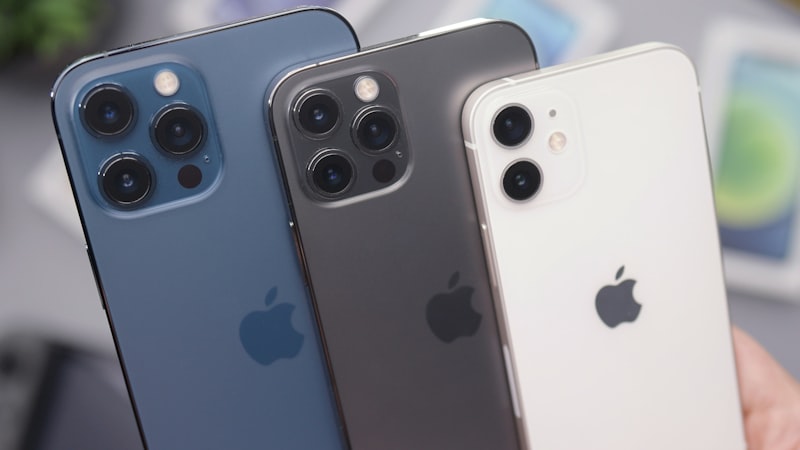
The elimination of physical speakers would not only contribute to a cleaner aesthetic but could also unlock significant internal real estate for other components, such as larger batteries or more advanced camera systems. This shift wouldn't be a sudden one, but rather a gradual evolution, leveraging existing technologies and exploring new acoustic solutions.
Haptic Feedback as a Stepping Stone
Apple's expertise in haptic feedback, particularly with the Taptic Engine, provides a crucial foundation. The Taptic Engine doesn't just create vibrations; it generates nuanced and directional sensations. These capabilities could be expanded to transmit audio signals directly through the device's frame, effectively turning the entire iPhone into a speaker. Early iterations of this technology would likely focus on specific use cases, such as subtle notifications or localized audio cues, gradually expanding to encompass a wider range of audio experiences.
Acoustic Surface Technology: The Next Frontier
Beyond enhanced haptics, Acoustic Surface Technology (AST) presents a more ambitious approach. This technology, already employed in some high-end televisions, utilizes actuators to vibrate the display panel itself, generating sound directly from the screen. Integrating AST into the iPhone would require significant miniaturization and refinement, but the potential benefits are considerable. It would eliminate the need for dedicated speaker openings, allowing for a truly seamless design and potentially improved water resistance. As we explored in our analysis of display technology at iPhone View, Apple has consistently invested in pushing the boundaries of display innovation, and acoustic integration could be the next logical step.
Patent Activity and Supply Chain Signals
While concrete evidence remains elusive, Apple's patent filings offer hints of its exploration into speakerless audio solutions. Patents detailing acoustic transmission through device enclosures and alternative vibration-based audio generation methods suggest a sustained research effort. Moreover, reports from the supply chain indicate Apple's increasing interest in advanced actuator technologies and materials optimized for acoustic transmission. These signals, while not definitive proof, paint a compelling picture of Apple's long-term vision.
Challenges and Considerations
The transition to speakerless audio presents numerous technical challenges. Ensuring adequate audio fidelity and volume levels, particularly in noisy environments, will be paramount. Battery consumption is another critical factor, as driving actuators for audio generation can be energy-intensive. Furthermore, Apple would need to address potential concerns regarding sound leakage and privacy. Bone conduction technology, which transmits sound directly through the skull, could offer a complementary solution for private listening, potentially integrated into future AirPods. As we covered in our recent article about buttonless design, the trend is to remove any physical interruption in the iPhone design.
A Gradual and Calculated Shift
The move towards speakerless audio is unlikely to be a sudden revolution. Instead, it will likely be a gradual and calculated shift, with Apple carefully assessing the technological feasibility, user experience, and market demand. Initial implementations may be limited to specific iPhone models or features, allowing Apple to gather data and refine its approach. Ultimately, the goal is to create a more streamlined, efficient, and aesthetically pleasing device, one that seamlessly integrates audio into the iPhone's very structure.
While the iPhone 20 might not be entirely speakerless, the seeds are already being sown for a future where sound emanates directly from the device's surface, blurring the lines between hardware and experience.
Questions readers ask
Does iOS need rearchitecting to make speakerless audio work properly?
Apple would need a window manager or surface-handling layer in iOS to do this well. The plumbing already exists on iPadOS in a limited form, so the engineering question is less invention and more refinement.
Where is Apple's supply chain on speakerless audio right now?
Reports out of Asia consistently cite a handful of suppliers competing on the relevant component, with Apple splitting orders rather than single-sourcing. That hedging pattern tends to mean a real product is being prepared, not just an R&D exploration.
Is speakerless audio realistic for the next iPhone, or further out?
Most signals point to a later cycle rather than imminent release. Component lead times for speakerless audio suggest Apple is still validating the supply side, and the company tends to wait until yields hit production targets before committing on stage.
What's the biggest tradeoff Apple has to swallow for speakerless audio?
Every Apple decision is a tradeoff, and the obvious one here is internal volume. Adding speakerless audio costs millimetres somewhere — usually battery capacity or camera module depth — and Apple has to decide which line item to trim.
In short — what's the takeaway on a gradual and calculated shift?
It comes back to whether Apple can ship speakerless audio without compromising the parts of the iPhone people already pay for. The detail in this section is where that case is made or broken.