The iPhone's Material Palette: Beyond Durability, Towards Tactile Differentiation
The iPhone's Material Palette: Beyond Durability, Towards Tactile Differentiation
For years, the narrative surrounding iPhone materials has been dominated by a singular focus: durability. From the early days of anodized aluminum to the more recent adoption of titanium, the emphasis has been on scratch resistance, drop protection, and overall longevity. However, a subtle but significant shift is underway. Apple is increasingly leveraging materials not just for their robustness, but for the unique tactile experiences they offer, creating a more nuanced and differentiated product line.
Editor's pick: MagSafe iPhone cases on Amazon → As an Amazon Associate, this site earns from qualifying purchases.
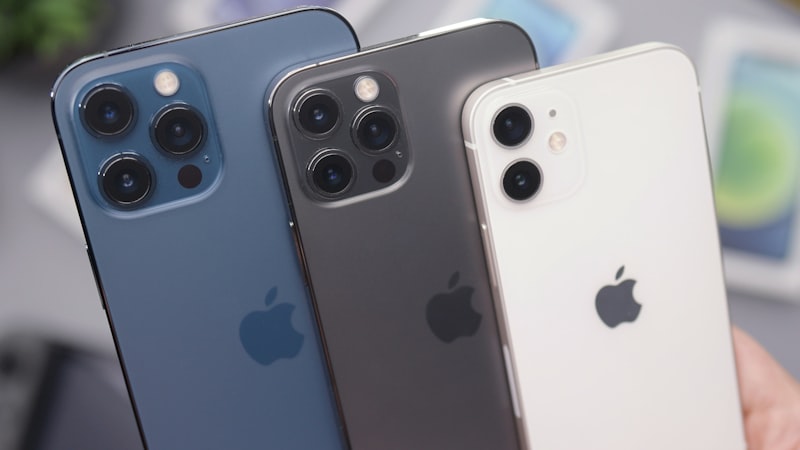
This shift is evident in the subtle variations between iPhone models. The standard iPhone, typically constructed from aluminum and glass, provides a familiar, cool-to-the-touch sensation. The Pro models, with their titanium frames, offer a different, more premium feel. This differentiation is not merely aesthetic; it's an intentional design choice aimed at creating a tangible hierarchy within the product lineup.
The future likely holds further exploration of this tactile landscape. Apple's patent filings suggest continued research into advanced materials, including textured surfaces and alloys with specific thermal properties. Imagine an iPhone with a subtly textured back, providing enhanced grip and a unique in-hand feel. Or perhaps a device that subtly warms to the touch when held, creating a more intimate and comforting experience.
Consider also the implications of Apple's commitment to sustainability. The company's stated goal of carbon neutrality necessitates a shift towards more sustainable materials, including recycled aluminum, bio-based plastics, and potentially even novel materials derived from agricultural waste. This presents a design challenge: how to maintain the premium feel and durability that consumers expect while embracing more environmentally friendly alternatives.
One potential solution lies in the development of new surface treatments and coatings. Advanced nano-coatings could provide enhanced scratch resistance and water repellency without compromising the underlying material's tactile properties. Similarly, textured finishes could be applied to recycled materials to create a more premium and visually appealing aesthetic.
The move towards greater material differentiation also has implications for repairability. As Apple experiments with more complex materials and construction techniques, repairing damaged iPhones becomes increasingly challenging. This is an area where Apple faces scrutiny, with calls for greater transparency and access to repair manuals and spare parts. The tension between design innovation and repairability will likely continue to be a key challenge in the years to come.
Furthermore, the increasing complexity of iPhone materials may impact the design of next-generation devices such as the rumored foldable iPhone. As we cover extensively at iPhone Open (https://iphoneopen.com), the choice of materials for a device with a flexible display is crucial for ensuring durability and flexibility.
Apple's pursuit of the perfect display, which we explored in our analysis of display technology at iPhone View (https://iphoneview.com), also directly impacts material choices. The integration of under-display sensors and cameras requires careful consideration of the optical properties of the materials used in the display stack.
In conclusion, the iPhone's material palette is evolving beyond a simple focus on durability. Apple is increasingly leveraging materials to create a richer, more nuanced tactile experience, differentiating its product lineup and pushing the boundaries of design innovation. The challenges ahead lie in balancing these goals with sustainability, repairability, and the ever-increasing complexity of mobile device technology. The next few years promise to be a fascinating period of material exploration for the iPhone.
Questions readers ask
What's the biggest tradeoff Apple has to swallow for material palette tactile differentiation?
Every Apple decision is a tradeoff, and the obvious one here is internal volume. Adding material palette tactile differentiation costs millimetres somewhere — usually battery capacity or camera module depth — and Apple has to decide which line item to trim.
What does material palette tactile differentiation actually cost — in price, weight, or battery?
Expect a premium of roughly $200–300 over the standard model, plus a small weight penalty. Battery life is the bigger variable — early prototypes typically trade an hour or two of screen-on time for the new capability, then claw it back over a generation.
How does material palette tactile differentiation change the upgrade calculus for existing owners?
Existing owners weigh material palette tactile differentiation against the upgrade they were already planning. If the feature is meaningful for daily use, it pulls forward upgrades by about a year; if it is novelty, it shifts nothing.
Does material palette tactile differentiation require new developer APIs, or can existing apps adapt?
Apple historically ships a quiet developer API the year before the hardware lands, so existing apps that follow human-interface guidelines should adapt with modest work. Apps that hard-code layouts will need updates.
In short — what's the takeaway on more from iphone arc?
It comes back to whether Apple can ship material palette tactile differentiation without compromising the parts of the iPhone people already pay for. The detail in this section is where that case is made or broken.