iPhone's Evolving Approach to Haptics: Beyond the Taptic Engine
iPhone's Evolving Approach to Haptics: Beyond the Taptic Engine
The iPhone’s haptic feedback system, largely powered by the Taptic Engine, has been a cornerstone of its user experience since its introduction in the iPhone 6s. What began as a simple tap to confirm actions has evolved into a nuanced system capable of conveying a wide range of sensations, enriching interactions and providing crucial feedback. However, the current system is facing limitations, prompting Apple to explore new avenues for delivering even more sophisticated and immersive haptic experiences.
Editor's pick: MagSafe iPhone cases on Amazon → As an Amazon Associate, this site earns from qualifying purchases.
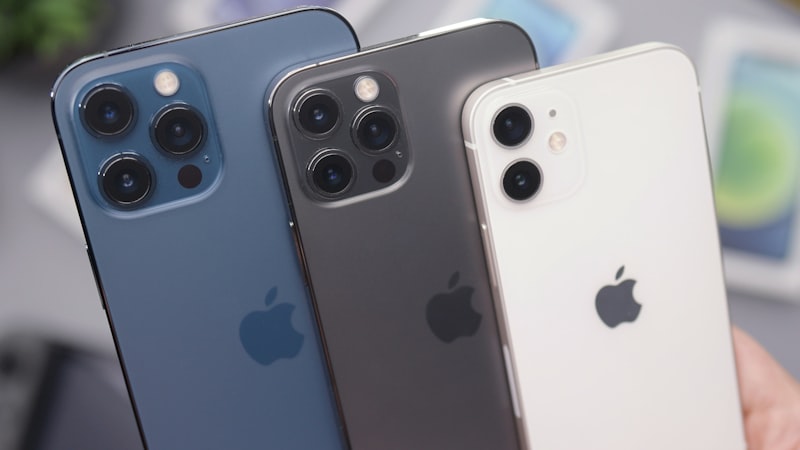
The original Taptic Engine was a linear actuator, a small motor that produced vibrations along a single axis. This provided a distinct, precise feeling compared to the often-mushy vibrations of earlier smartphones. It wasn't just about the vibration itself, but the speed and accuracy with which it could be delivered. This allowed Apple to simulate clicks, bumps, and other tactile sensations far more convincingly.
Over the years, Apple has refined the Taptic Engine, improving its responsiveness and broadening its range of possible vibrations. The introduction of Haptic Touch, replacing 3D Touch, demonstrated the refined capabilities of the system. While 3D Touch relied on pressure sensing, Haptic Touch successfully used a long press combined with haptic feedback to simulate the feeling of a physical button press. This change showed Apple's commitment to haptics, even when removing hardware features.
Despite these advancements, the current Taptic Engine architecture has inherent limitations. The primary challenge is its reliance on a single, centrally located actuator. This means that all haptic feedback is generated from a single point, which can feel somewhat artificial, especially when simulating localized sensations on the screen. Think about trying to simulate a click on a software keyboard; while the haptic feedback is present, it doesn't truly feel like your finger is interacting with a physical key.
Localized Haptics: The Next Frontier
To overcome these limitations, Apple has been exploring solutions involving multiple, localized haptic actuators. This approach would allow for more precise and realistic tactile feedback, creating a more immersive and intuitive user experience. Patents filed by Apple suggest various implementations, including arrays of tiny actuators embedded directly beneath the display. These actuators could be individually controlled to generate vibrations in specific areas of the screen, creating the illusion of physical textures, edges, and buttons.
This shift towards localized haptics could have a profound impact on various iPhone applications. Imagine feeling the texture of different materials in a shopping app, or experiencing realistic feedback when playing games. It could also significantly enhance accessibility, providing more intuitive feedback for visually impaired users. Such advancements would complement the visual fidelity improvements we regularly discuss at iPhone View, offering a richer, more complete sensory experience.
Material Science and New Actuator Technologies
Achieving localized haptics requires advancements in both actuator technology and material science. The actuators need to be small, efficient, and capable of producing a wide range of vibrations with precise control. Piezoelectric actuators, which convert electrical energy into mechanical motion, are a promising candidate. Apple has already used piezoelectric materials in the Apple Watch's Taptic Engine, and further development could lead to even smaller and more powerful actuators suitable for localized haptics.
Furthermore, the materials used in the iPhone's display and chassis play a crucial role in haptic feedback. The stiffness and damping properties of these materials affect how vibrations are transmitted and perceived. Apple's continued investment in materials research, as evidenced by their adoption of titanium and ceramic components, is likely driven in part by the desire to optimize haptic feedback. Further improvements in these areas, particularly in the display stack itself, would be essential for realizing the full potential of localized haptics.
The evolution of haptics is a crucial aspect of the iPhone's ongoing refinement. By moving beyond the limitations of the single-actuator Taptic Engine and embracing localized haptics, Apple can create a more immersive, intuitive, and ultimately more satisfying user experience. While the challenges are significant, Apple's history of innovation suggests that they are well-positioned to lead the way in this next chapter of haptic technology.