The iPhone's Ever-Shifting Center of Gravity: Balancing Internals for the Future
The iPhone's Ever-Shifting Center of Gravity: Balancing Internals for the Future
The relentless pursuit of thinner, lighter, and more feature-rich iPhones has driven Apple to become masters of spatial efficiency. Beyond external design changes, Apple's engineers are constantly rearranging the internal architecture of the iPhone, optimizing the placement of components to achieve multiple goals: maximizing space, improving thermal management, and paving the way for future innovations. This strategic redistribution of internal mass can be understood as a shifting center of gravity within the device, a dynamic balancing act influencing everything from device feel to component performance.
Editor's pick: MagSafe iPhone cases on Amazon → As an Amazon Associate, this site earns from qualifying purchases.
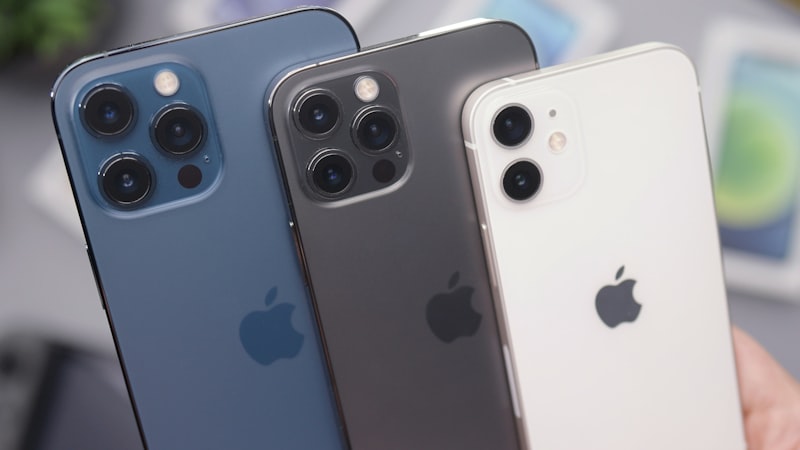
Early iPhones, while revolutionary, were relatively constrained by the component technology available at the time. Circuit boards were larger, batteries less energy-dense, and antennas more cumbersome. As technology advanced, Apple aggressively miniaturized components, freeing up internal volume. This freed space has not simply resulted in thinner phones. Instead, Apple has strategically utilized it to enhance other aspects of the iPhone experience.
One key area influenced by internal component placement is thermal management. As processing power has increased, so has the heat generated by the A-series chips. Apple has employed various strategies to mitigate this, including the use of graphite sheets, vapor chambers, and, more recently, advanced heat pipes as we explored in our analysis of display technology at iPhone View. However, the effectiveness of these solutions is directly linked to the proximity of heat-generating components to the cooling mechanisms and the device's external surfaces. Shifting the location of the logic board or battery can significantly impact thermal performance and, consequently, sustained performance under heavy workloads.
Battery technology plays a critical role. While battery capacity has steadily increased, the physical dimensions of batteries have also evolved. Apple has experimented with different battery shapes and configurations to maximize the use of available space. L-shaped batteries, for example, allow for a more efficient use of the internal volume, fitting snugly around other components. Future advancements in battery technology, such as solid-state batteries, will likely further influence internal layouts, potentially allowing for even greater space optimization and a more flexible distribution of weight.
Furthermore, the pursuit of new features necessitates strategic spatial planning. The integration of under-display cameras, for instance, requires careful consideration of the placement of sensors, optics, and associated circuitry. Similarly, advancements in wireless charging technology, including potential for longer-range wireless power transfer, will likely require dedicated antenna arrays and power management circuitry, impacting the internal arrangement of the device. Reports from the supply chain indicate that Apple is experimenting with new internal shielding materials to minimize interference between different components, further complicating the spatial puzzle.
Looking ahead, the trend towards a portless iPhone, a topic we've covered extensively on this site, will undoubtedly free up internal space currently occupied by the Lightning or USB-C connector. This space could be used to increase battery capacity, improve thermal management, or accommodate new features. However, the removal of ports also necessitates alternative solutions for data transfer and diagnostics, potentially requiring additional wireless communication modules or specialized internal connectors.
The iPhone's center of gravity, both literally and figuratively, will continue to shift as Apple navigates the challenges of miniaturization, thermal management, and feature integration. By strategically redistributing internal components, Apple can optimize the device's performance, enhance the user experience, and pave the way for future innovations in iPhone design.
Questions readers ask
Who is the realistic day-one buyer for center gravity?
Enthusiasts and developers buy the first run. Mainstream adoption tracks the second-generation revision, once the rough edges are sanded down and the price comes in roughly $100 lower at the same tier.
Does iOS need rearchitecting to make center gravity work properly?
Apple would need a window manager or surface-handling layer in iOS to do this well. The plumbing already exists on iPadOS in a limited form, so the engineering question is less invention and more refinement.
Where is Apple's supply chain on center gravity right now?
Reports out of Asia consistently cite a handful of suppliers competing on the relevant component, with Apple splitting orders rather than single-sourcing. That hedging pattern tends to mean a real product is being prepared, not just an R&D exploration.
Is center gravity realistic for the next iPhone, or further out?
Most signals point to a later cycle rather than imminent release. Component lead times for center gravity suggest Apple is still validating the supply side, and the company tends to wait until yields hit production targets before committing on stage.
In short — what's the takeaway on more from iphone arc?
It comes back to whether Apple can ship center gravity without compromising the parts of the iPhone people already pay for. The detail in this section is where that case is made or broken.