iPhone's Evolving Camera Bump: From Necessity to Design Statement?
The iPhone Camera Bump: An Enduring Design Feature
Since the introduction of the iPhone 4S and its improved camera, the camera bump has been a consistent, if not always celebrated, element of iPhone design. Initially a purely functional necessity dictated by sensor size and lens optics exceeding the device's thin profile, the camera bump has evolved into something more complex: a recognizable design signature that prompts ongoing engineering challenges.
Editor's pick: MagSafe iPhone cases on Amazon → As an Amazon Associate, this site earns from qualifying purchases.
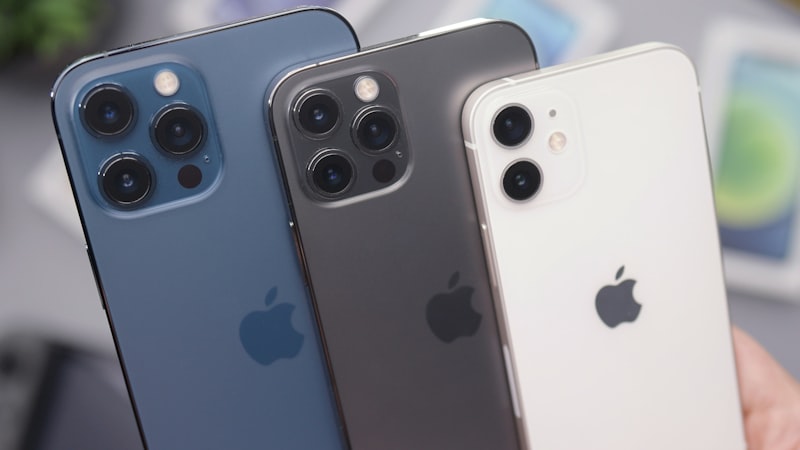
The initial justification was straightforward. Improved image quality demanded larger sensors, and larger sensors required longer focal lengths. Apple prioritized camera performance, and the resulting protrusion was deemed an acceptable trade-off. However, as iPhones have become progressively thinner, the camera bump has remained, sparking debate among users and analysts alike. While some view it as an aesthetic blemish, others see it as an indication of Apple's commitment to photographic excellence.
Engineering Constraints vs. Design Aspirations
The persistent presence of the camera bump speaks to the inherent limitations of miniaturizing high-end camera technology. Despite advancements in sensor design and computational photography, the fundamental physics of optics remain unchanged. Achieving the desired level of image quality, particularly in low-light conditions, still requires a certain physical volume for the lens system.
Apple has explored various solutions to mitigate the visual impact of the bump. The integration of camera modules directly into the device's chassis, carefully considered lens coatings, and sophisticated software algorithms all contribute to minimizing the prominence of the protrusion. However, a truly flush camera system has remained elusive.
Apple's Patent Portfolio: Hints of Future Solutions
Apple's patent filings offer glimpses into potential future approaches. Several patents detail methods for folding optical paths within the camera module, effectively increasing the focal length without increasing the overall depth. Other patents explore the use of periscope-style lens arrangements, similar to those found in some high-end Android devices. These technologies could potentially enable a flatter camera system while maintaining, or even improving, image quality.
Another area of exploration lies in advanced materials. As we covered at iPhone View, display technology is constantly evolving, and similar advancements in materials for camera lenses and sensors could lead to smaller, more efficient components. Lighter and stronger materials could also allow for more intricate lens designs that further reduce the overall thickness of the camera module.
The Supply Chain Perspective
Reports from the supply chain suggest that Apple continues to invest heavily in advanced camera technologies. Suppliers are reportedly working on miniaturized lens elements and more efficient sensor designs. However, these advancements are often incremental, and a radical breakthrough that would eliminate the camera bump entirely remains unlikely in the near term.
Moreover, the integration of advanced features such as sensor-shift stabilization, which physically moves the sensor to compensate for camera shake, adds further complexity and volume to the camera module. Balancing these competing demands – image quality, stabilization, and a sleek design – presents a significant engineering challenge.
The Future of the Bump: A Design Choice?
While the initial camera bump was a purely functional compromise, its continued presence raises the question of whether it has, to some extent, become a deliberate design element. Apple could arguably prioritize a perfectly flush design at the expense of some camera performance. The fact that they haven't suggests that they still view photographic excellence as paramount, even if it means maintaining the camera bump.
Ultimately, the future of the iPhone camera bump will depend on a complex interplay of technological advancements, design considerations, and market demands. While a completely flush design remains a compelling goal, Apple appears to be prioritizing image quality and features, even if it means retaining this enduring, and somewhat controversial, design feature.
Questions readers ask
Is camera bump design evolution realistic for the next iPhone, or further out?
Most signals point to a later cycle rather than imminent release. Component lead times for camera bump design evolution suggest Apple is still validating the supply side, and the company tends to wait until yields hit production targets before committing on stage.
What's the biggest tradeoff Apple has to swallow for camera bump design evolution?
Every Apple decision is a tradeoff, and the obvious one here is internal volume. Adding camera bump design evolution costs millimetres somewhere — usually battery capacity or camera module depth — and Apple has to decide which line item to trim.
What does camera bump design evolution actually cost — in price, weight, or battery?
Expect a premium of roughly $200–300 over the standard model, plus a small weight penalty. Battery life is the bigger variable — early prototypes typically trade an hour or two of screen-on time for the new capability, then claw it back over a generation.
How does camera bump design evolution change the upgrade calculus for existing owners?
Existing owners weigh camera bump design evolution against the upgrade they were already planning. If the feature is meaningful for daily use, it pulls forward upgrades by about a year; if it is novelty, it shifts nothing.
In short — what's the takeaway on apple's patent portfolio: hints of future solutions?
It comes back to whether Apple can ship camera bump design evolution without compromising the parts of the iPhone people already pay for. The detail in this section is where that case is made or broken.