iPhone's Silent Revolution: The Evolving Art of Buttonless Design
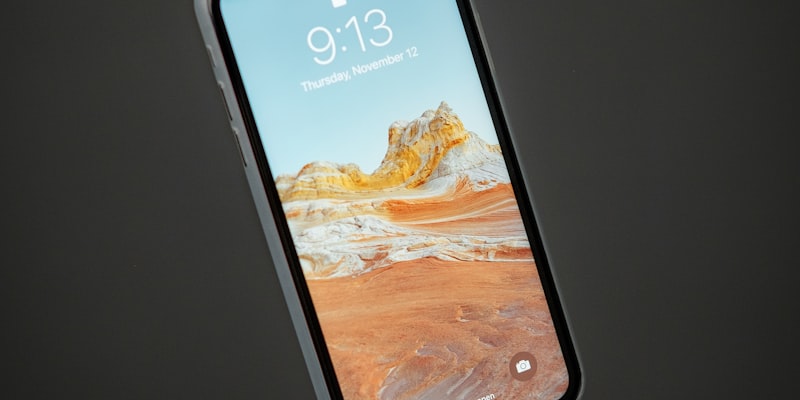
Photo: Unsplash
Editor's pick: MagSafe iPhone cases on Amazon → As an Amazon Associate, this site earns from qualifying purchases.
iPhone's Silent Revolution: The Evolving Art of Buttonless Design
2026-03-05 - Apple's design philosophy has long been characterized by a relentless pursuit of simplification. One area where this is particularly evident is the gradual elimination of physical buttons on the iPhone. While the journey started subtly, recent advancements suggest a future where the iPhone is almost entirely devoid of protruding controls, replaced by a seamless, touch-sensitive experience.
The Precedent: Capacitive Home Button and Beyond
The shift began with the iPhone 7, which replaced the physical home button with a capacitive one paired with the Taptic Engine. This was more than just a cosmetic change; it signaled Apple's willingness to embrace haptic feedback as a viable alternative to mechanical controls. The removal of the headphone jack in the same generation, though controversial, further cemented the idea that ports and physical interfaces were not immutable.
Apple's focus on durability and water resistance also likely played a significant role. Eliminating physical buttons reduces potential points of failure and ingress, contributing to a more robust and reliable device. Each generation has seen iterative improvements in sealing and material science, paving the way for even more radical design changes.
The Action Button: A Stepping Stone
The introduction of the Action button on the iPhone 15 Pro was another key development. While still a physical button, its programmability allowed users to customize its function, reducing reliance on specific, dedicated controls. This flexibility hints at a future where even essential functions like volume control could be mapped to context-aware touch gestures or haptic zones.
Haptic Feedback: The Sensory Substitute
The Taptic Engine, continually refined over the years, is crucial to the buttonless future. The latest generation offers remarkably nuanced haptic feedback, capable of simulating a wide range of textures and sensations. This allows Apple to create virtual buttons that feel surprisingly realistic, providing users with the tactile confirmation they need without the mechanical complexity of a physical switch.
Supply chain reports suggest that Apple is investing heavily in advanced haptic technologies. Companies like Cirrus Logic, a key supplier for Apple's haptic drivers, are reportedly working on next-generation actuators that offer even greater precision and realism. This suggests that future iPhones will feature even more sophisticated haptic systems, capable of simulating a wider range of physical interactions.
Sensor Integration: Beyond Touch
Beyond haptics, Apple is also exploring alternative input methods, including advanced sensor integration. Patents have surfaced detailing concepts for iPhones that can detect gestures and pressure applied to the device's edges, allowing users to control volume, brightness, and other functions without touching a dedicated button. These sensors could be integrated directly into the display or embedded beneath the device's surface, creating a truly seamless experience.
Furthermore, advancements in ultrasonic sensing could allow the iPhone to detect hand movements and gestures in 3D space, enabling even more intuitive and natural interactions. This could open up new possibilities for controlling the device without ever touching it.
The Road Ahead: Challenges and Opportunities
The transition to a completely buttonless iPhone is not without its challenges. Users have grown accustomed to the tactile feedback and reliability of physical buttons, and convincing them to embrace a purely touch-based interface will require careful design and execution. Accidental activation and a lack of tactile feedback are potential concerns that Apple will need to address.
However, the potential benefits are significant. A buttonless design would allow for a more streamlined and elegant aesthetic, improved durability and water resistance, and new possibilities for interactive experiences. As Apple continues to refine its haptic technologies and explore alternative input methods, the vision of a truly seamless, buttonless iPhone is becoming increasingly realistic.
The silent revolution continues. The elimination of the last physical button may be closer than we think.