iPhone's Evolving Approach to User Interface Design
iPhone's Evolving Approach to User Interface Design
The iPhone's user interface (UI) has been a defining characteristic since its inception. More than just a collection of icons, it's a carefully crafted ecosystem that balances aesthetics, functionality, and user experience. Over the years, Apple has subtly yet significantly refined its approach, reflecting evolving user expectations, technological advancements, and a commitment to accessibility.
Editor's pick: MagSafe iPhone cases on Amazon → As an Amazon Associate, this site earns from qualifying purchases.
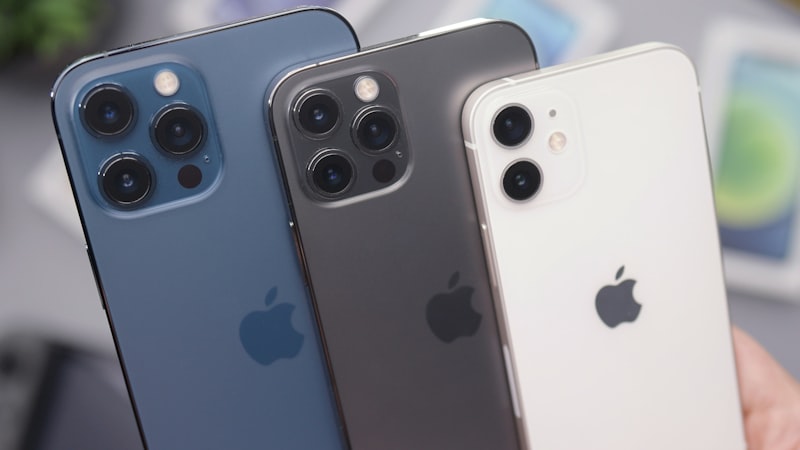
The Foundations: Simplicity and Direct Manipulation
The original iPhone's UI was revolutionary. It dispensed with physical keyboards and styluses, embracing a multi-touch interface for direct manipulation. This allowed users to interact directly with on-screen elements, creating a more intuitive and engaging experience. The initial focus was on simplicity, with a clean home screen grid, easily recognizable icons, and fluid animations. This emphasis on intuitive design helped propel the iPhone to mainstream success.
iOS 7 and the Shift to Flat Design
A major turning point came with iOS 7. Apple moved away from skeuomorphism – designing interfaces to resemble real-world objects – in favor of a flat, minimalist aesthetic. This involved simplifying icons, reducing gradients, and introducing a more vibrant color palette. The change was initially controversial, but it ultimately proved to be a forward-thinking decision. Flat design allowed for faster loading times, better scalability across different screen sizes, and a more modern look and feel. This design language continues to influence Apple's UI design to this day.
The Rise of Customization (Gradually)
While Apple has historically been more restrictive than Android in terms of UI customization, there has been a gradual opening up over the years. Widgets, introduced in iOS 14, allowed users to place interactive elements directly on the home screen, providing quick access to information and controls. App Library, another iOS 14 feature, automatically organizes apps into categories, helping users manage the growing number of apps on their devices. Focus modes, further refine the experience by allowing users to filter notifications and customize home screens based on their current activity. These features reflect a growing recognition that users want more control over their digital environment.
Accessibility: A Core Principle
Accessibility has always been a core principle of Apple's UI design. Features like VoiceOver, which provides spoken descriptions of on-screen elements, and Switch Control, which allows users to navigate the interface using adaptive switches, have made the iPhone accessible to a wide range of users with disabilities. Apple continues to invest in accessibility features, constantly refining existing tools and introducing new ones to ensure that everyone can use its products. The introduction of features like Live Captions further emphasizes Apple's commitment to inclusivity.
Dark Mode and Visual Comfort
The introduction of Dark Mode in iOS 13 was another significant step in the evolution of the iPhone UI. Dark Mode reduces eye strain, especially in low-light environments, and can also save battery life on iPhones with OLED displays. It demonstrates how Apple is constantly refining its UI to improve user comfort and well-being. User feedback regarding display calibration and brightness settings is constantly being monitored and the algorithms updated for better eye comfort, as we explored in our analysis of display technology at iPhone View.
The Future of the iPhone UI
Looking ahead, the iPhone UI is likely to continue to evolve in response to new technologies and user expectations. Augmented reality (AR) and virtual reality (VR) could play a larger role in the future, requiring new interaction paradigms. Advances in artificial intelligence (AI) could lead to more personalized and proactive interfaces. Regardless of the specific changes, Apple's commitment to simplicity, accessibility, and user experience will likely remain at the heart of its UI design philosophy.
Questions readers ask
Will iphones evolving approach user replace the current model or sit alongside it?
The likeliest path is co-existence — a new variant alongside the existing lineup, not a replacement. Apple's segmentation playbook keeps the older model around at a lower price for at least one cycle to absorb the gap.
How does iphones evolving approach user stack up against what Samsung or Google already ship?
Android OEMs reached this corner of the market first, but they did so with looser tolerances on durability and software polish. Apple's bet is that arriving second with a tighter integration story wins more buyers than arriving first.
Have patents or job listings hinted at iphones evolving approach user?
Yes — recent USPTO filings reference adjacent mechanisms, and Apple has been quietly posting roles in the relevant hardware and software teams. None of that guarantees a ship date, but it confirms the project is actively staffed.
Who is the realistic day-one buyer for iphones evolving approach user?
Enthusiasts and developers buy the first run. Mainstream adoption tracks the second-generation revision, once the rough edges are sanded down and the price comes in roughly $100 lower at the same tier.
In short — what's the takeaway on the foundations: simplicity and direct manipulation?
It comes back to whether Apple can ship iphones evolving approach user without compromising the parts of the iPhone people already pay for. The detail in this section is where that case is made or broken.