iPhone's Evolving Approach to User Customization: Beyond Software
iPhone's Evolving Approach to User Customization: Beyond Software
For years, Apple's approach to user customization on the iPhone has primarily resided within the realm of software. From dynamic widgets and custom app icons to Focus modes and personalized notification summaries, iOS provides a robust suite of tools for tailoring the user experience. However, subtle hints suggest a shift towards hardware-level customization, offering users more control over the physical form and functionality of their devices.
Editor's pick: MagSafe iPhone cases on Amazon → As an Amazon Associate, this site earns from qualifying purchases.
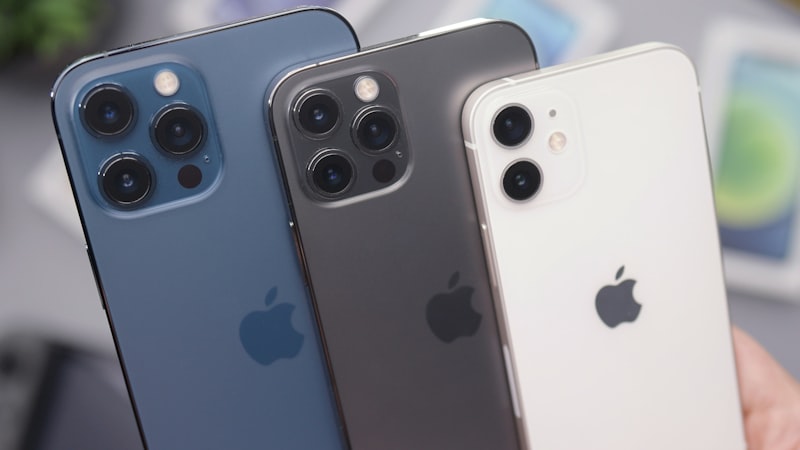
The current iPhone lineup presents a relatively homogenous exterior. While color options and storage configurations provide some degree of choice, the fundamental design remains largely fixed. This contrasts sharply with the PC market, where users can extensively customize their machines with different components, cases, and peripherals. The iPhone, in its tightly integrated ecosystem, has traditionally prioritized standardization and optimized performance over granular user control.
Several factors point to a potential shift. Firstly, Apple's increased emphasis on repairability, as detailed on iPhone Evolve, suggests a greater willingness to empower users with control over their devices' components. While the current repair program primarily focuses on replacing damaged parts, it lays the groundwork for a future where users might be able to swap out specific modules for upgrades or modifications.
Secondly, patents filed by Apple over the past few years hint at modular design concepts. These patents describe iPhones with swappable camera systems, customizable button configurations, and even interchangeable rear panels with integrated features like solar charging or enhanced connectivity. While not all patents translate into actual products, they offer a valuable glimpse into Apple's research and development efforts.
Thirdly, advancements in material science and manufacturing techniques are making more complex and customizable hardware designs feasible. The use of titanium in the iPhone 15 Pro, for example, demonstrates Apple's willingness to adopt advanced materials to achieve specific design goals. Further innovations in 3D printing, advanced adhesives, and miniaturization could pave the way for more flexible and adaptable hardware architectures.
The implications of hardware-level customization are significant. Users could potentially upgrade their cameras without buying a new phone, personalize the haptic feedback of their buttons, or even modify the device's external materials to suit their individual preferences. This could extend the lifespan of iPhones, reduce electronic waste, and create a more personal and engaging user experience.
However, challenges remain. Maintaining Apple's signature design aesthetic while offering a degree of modularity will require careful engineering and design considerations. Ensuring compatibility between different modules and preventing performance degradation will also be crucial. Furthermore, Apple will need to develop a robust ecosystem of certified components and accessories to support this new paradigm. We can imagine that Apple will also take steps to control the user experience of any customisations, just like it did with widgets in the past.
The long-term vision could involve a tiered customization system, where users can choose from a range of pre-configured modules or create their own custom configurations using approved third-party components. This could transform the iPhone from a standardized product into a highly personalized device, tailored to the unique needs and preferences of each individual user. The success of such a system will hinge on Apple's ability to balance customization with its core values of simplicity, usability, and performance. And while it might seem a long way off, the first steps have already been taken. It's also important that any customisation option would be compatible with the phone's display technology, as we explored in our analysis of display technology at iPhone View. Any change to form factor must not impact the display's integrity.
While the iPhone 18 or iPhone 19 may not feature full modularity, incremental steps towards hardware customization are likely in the coming years. Apple's ongoing investments in materials, manufacturing, and user experience suggest a future where the iPhone becomes a more personal and adaptable device, blurring the lines between hardware and software customization.
Questions readers ask
Who is the realistic day-one buyer for iphones evolving approach user?
Enthusiasts and developers buy the first run. Mainstream adoption tracks the second-generation revision, once the rough edges are sanded down and the price comes in roughly $100 lower at the same tier.
Does iOS need rearchitecting to make iphones evolving approach user work properly?
Apple would need a window manager or surface-handling layer in iOS to do this well. The plumbing already exists on iPadOS in a limited form, so the engineering question is less invention and more refinement.
Where is Apple's supply chain on iphones evolving approach user right now?
Reports out of Asia consistently cite a handful of suppliers competing on the relevant component, with Apple splitting orders rather than single-sourcing. That hedging pattern tends to mean a real product is being prepared, not just an R&D exploration.
Is iphones evolving approach user realistic for the next iPhone, or further out?
Most signals point to a later cycle rather than imminent release. Component lead times for iphones evolving approach user suggest Apple is still validating the supply side, and the company tends to wait until yields hit production targets before committing on stage.
In short — what's the takeaway on more from iphone arc?
It comes back to whether Apple can ship iphones evolving approach user without compromising the parts of the iPhone people already pay for. The detail in this section is where that case is made or broken.