iPhone's Evolving Relationship with Glass: Durability vs. Design
iPhone's Evolving Relationship with Glass: Durability vs. Design
Since its inception, the iPhone has relied heavily on glass as a key material for both its display and back panel. This reliance has presented Apple with a constant balancing act: achieving a premium aesthetic and optimal user experience while simultaneously maximizing durability and resistance to damage. The story of iPhone's glass is a story of continuous innovation, trade-offs, and the relentless pursuit of the perfect balance.
Editor's pick: MagSafe iPhone cases on Amazon → As an Amazon Associate, this site earns from qualifying purchases.
The Gorilla Glass Era and the Pursuit of Scratch Resistance
Early iPhones, beginning with the original in 2007, employed Corning's Gorilla Glass. This chemically strengthened glass offered a significant improvement in scratch resistance compared to the plastic screens prevalent at the time. However, Gorilla Glass was not impervious to scratches, and users quickly learned the value of screen protectors. The focus during this period was primarily on preventing scratches, which were considered the most common type of everyday damage.
The Shift to Shatter Resistance and the Rise of Ceramic Shield
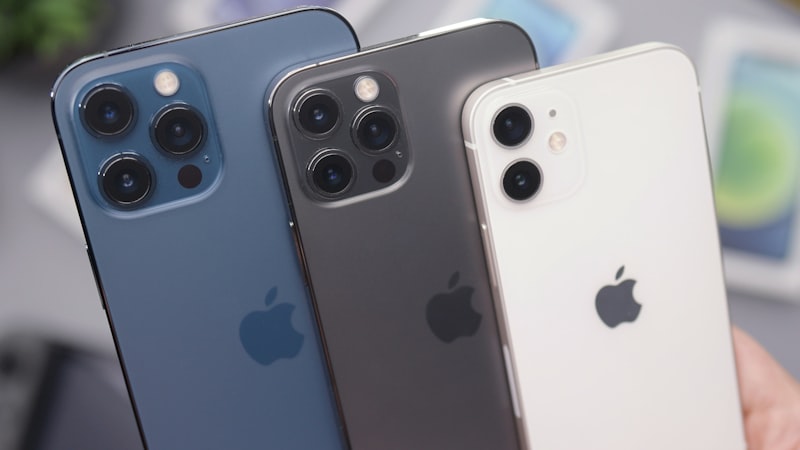
As iPhones grew larger and more expensive, the focus shifted towards shatter resistance. While scratch resistance remained important, the potential for catastrophic damage from drops became a greater concern. Apple's partnership with Corning evolved, culminating in the introduction of Ceramic Shield with the iPhone 12. This material, infused with nano-ceramic crystals, offered a substantial improvement in drop performance compared to previous generations. While Ceramic Shield was demonstrably more shatter-resistant, some users noted a trade-off: it appeared to be slightly more susceptible to micro-scratches than earlier versions of Gorilla Glass. This highlighted the inherent challenge of optimizing for both types of damage simultaneously.
The Design Implications of Durable Glass
The choice of glass material has significant implications for the overall design of the iPhone. More durable glass may require increased thickness, potentially impacting the device's weight and perceived slimness – a factor that is clearly still valued, as discussed on our sister site MacBook Neo regarding the trend towards thinner devices.
Furthermore, the manufacturing processes required to create advanced glass materials like Ceramic Shield are more complex and expensive, adding to the overall cost of the iPhone. Apple must carefully weigh these costs against the benefits of increased durability when making material choices.
Beyond the Surface: Internal Glass Components
While the external glass of the iPhone is the most visible, glass also plays a crucial role in internal components. Camera lenses, for example, rely on specialized glass formulations to achieve optimal image quality. The sensors themselves often incorporate glass elements. As camera technology continues to advance, the demands on these internal glass components will only increase.
Future Trends: Self-Healing Materials and Advanced Coatings
Looking ahead, several trends could shape the future of glass in iPhones. Self-healing materials, which can automatically repair minor scratches, are one promising area of research. While still in the early stages of development, these materials could significantly improve the long-term durability of iPhone screens. Advanced coatings, such as oleophobic and hydrophobic treatments, are also likely to play an increasingly important role in enhancing the user experience. These coatings can reduce fingerprints and smudges, making the screen easier to clean and maintain. As we explored in our analysis of display technology at iPhone View (https://iphoneview.com), display innovation is constant, and protective layers are part of this evolution.
The Ongoing Balancing Act
The relationship between Apple and glass is a continuous evolution. As technology advances and user expectations evolve, Apple will need to continue to innovate in order to find the optimal balance between durability, design, and cost. The future iPhone may incorporate entirely new materials or manufacturing processes, but glass is likely to remain a key component for the foreseeable future.
Questions readers ask
Where is Apple's supply chain on iphones evolving relationship glass right now?
Reports out of Asia consistently cite a handful of suppliers competing on the relevant component, with Apple splitting orders rather than single-sourcing. That hedging pattern tends to mean a real product is being prepared, not just an R&D exploration.
Is iphones evolving relationship glass realistic for the next iPhone, or further out?
Most signals point to a later cycle rather than imminent release. Component lead times for iphones evolving relationship glass suggest Apple is still validating the supply side, and the company tends to wait until yields hit production targets before committing on stage.
What's the biggest tradeoff Apple has to swallow for iphones evolving relationship glass?
Every Apple decision is a tradeoff, and the obvious one here is internal volume. Adding iphones evolving relationship glass costs millimetres somewhere — usually battery capacity or camera module depth — and Apple has to decide which line item to trim.
What does iphones evolving relationship glass actually cost — in price, weight, or battery?
Expect a premium of roughly $200–300 over the standard model, plus a small weight penalty. Battery life is the bigger variable — early prototypes typically trade an hour or two of screen-on time for the new capability, then claw it back over a generation.
In short — what's the takeaway on more from iphone arc?
It comes back to whether Apple can ship iphones evolving relationship glass without compromising the parts of the iPhone people already pay for. The detail in this section is where that case is made or broken.