The iPhone's Evolving Approach to Modularity: Repairability and the Future of Customization
The iPhone's Evolving Approach to Modularity: Repairability and the Future of Customization
For years, the iPhone has been synonymous with sleek, integrated design, often at the expense of repairability. However, recent trends suggest a subtle but significant shift towards increased modularity, driven by consumer demand, regulatory pressures, and the potential for future customization.
Editor's pick: MagSafe iPhone cases on Amazon → As an Amazon Associate, this site earns from qualifying purchases.
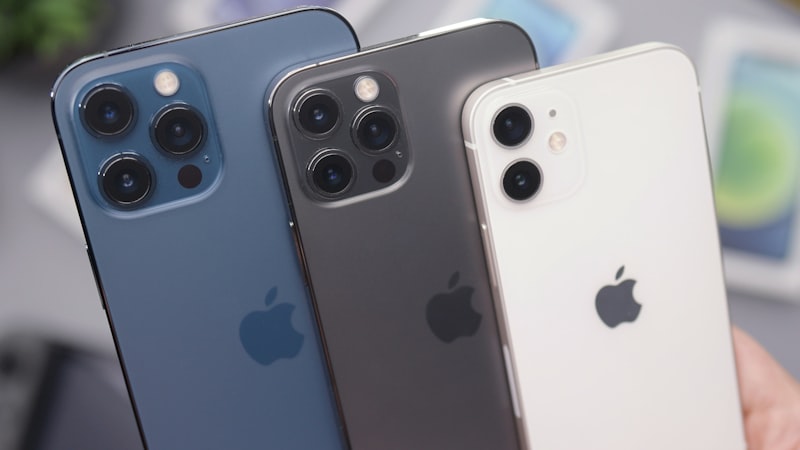
Historically, Apple has favored tightly integrated components, often glued or soldered together, making repairs difficult and expensive. This approach maximized internal space and contributed to the iPhone's slim profile, but it also resulted in a higher environmental footprint due to the need to replace entire devices for relatively minor issues. The outcry over this practice led to increased scrutiny from both consumers and regulators, influencing Apple's strategy.
The introduction of the Self Service Repair program in 2022 marked a turning point. While initially limited in scope and somewhat cumbersome, it signaled a willingness to empower users and independent repair shops. This program has steadily expanded, offering more parts and tools for a wider range of iPhone models. This inherently requires a degree of modularity; components must be designed to be removable and replaceable with relative ease.
Recent teardowns of the iPhone 18 Pro reveal further evidence of this trend. While still far from a fully modular design like some Android competitors, internal components are now more easily accessible and less reliant on adhesives. Connectors are increasingly used in place of soldering, simplifying the process of swapping out batteries, cameras, and other key modules. This shift is not merely cosmetic; it represents a fundamental change in Apple's design philosophy.
The benefits of increased modularity extend beyond repairability. It also opens the door to potential future customization options. Imagine a future where users can upgrade specific components, such as the camera system or battery, without replacing the entire phone. While this scenario is still speculative, the underlying design principles are already being implemented.
Of course, Apple faces significant challenges in balancing modularity with its commitment to aesthetics and performance. A more modular design could potentially compromise the iPhone's structural integrity, increase its thickness, or create new points of failure. Apple's engineers must carefully consider these trade-offs as they continue to evolve the iPhone's internal architecture. Furthermore, any increased modularity must be carefully considered in light of maintaining the thermal performance we've covered in our analysis of iphones evolving thermal management.
Supply chain reports suggest that Apple is exploring new manufacturing techniques that could further enhance modularity without sacrificing performance. These include advanced adhesive technologies, miniaturized connectors, and more robust internal frameworks. Patents filed by Apple also hint at potential future features, such as swappable camera modules and customizable back panels.
The road to a truly modular iPhone is likely to be a gradual one. Apple is unlikely to completely abandon its integrated design philosophy, but the trend towards increased modularity is undeniable. Driven by consumer demand, regulatory pressures, and the potential for future customization, this shift represents a significant evolution in the iPhone's design language. As we explored in our analysis of display technology at iPhone View, display technology is an area ripe for modular advancements as well. We anticipate seeing incremental improvements in repairability and customization options in the coming years, ultimately leading to a more sustainable and user-friendly iPhone experience. The next generation of iPhones may not be fully modular, but they are undoubtedly moving in that direction.
Questions readers ask
How does iphones evolving modularity change the upgrade calculus for existing owners?
Existing owners weigh iphones evolving modularity against the upgrade they were already planning. If the feature is meaningful for daily use, it pulls forward upgrades by about a year; if it is novelty, it shifts nothing.
Does iphones evolving modularity require new developer APIs, or can existing apps adapt?
Apple historically ships a quiet developer API the year before the hardware lands, so existing apps that follow human-interface guidelines should adapt with modest work. Apps that hard-code layouts will need updates.
What would convince a sceptical reviewer that iphones evolving modularity is worth it?
Hands-on time is the only honest test. A reviewer's first hour with the device tells them whether iphones evolving modularity is solving a real problem they had, or a feature looking for a use case. The reviews following launch will be the verdict.
Will iphones evolving modularity replace the current model or sit alongside it?
The likeliest path is co-existence — a new variant alongside the existing lineup, not a replacement. Apple's segmentation playbook keeps the older model around at a lower price for at least one cycle to absorb the gap.
In short — what's the takeaway on more from iphone arc?
It comes back to whether Apple can ship iphones evolving modularity without compromising the parts of the iPhone people already pay for. The detail in this section is where that case is made or broken.