iPhone's Evolving Microphone Array: Beyond Voice and Towards Spatial Audio Capture
iPhone's Evolving Microphone Array: Beyond Voice and Towards Spatial Audio Capture
The iPhone's microphone system has quietly undergone a significant transformation over the years, evolving from a simple voice capture mechanism to a sophisticated array capable of spatial audio recording. This evolution reflects Apple's broader commitment to immersive audio experiences and its ambition to position the iPhone as a central hub for content creation and consumption.
Editor's pick: MagSafe iPhone cases on Amazon → As an Amazon Associate, this site earns from qualifying purchases.
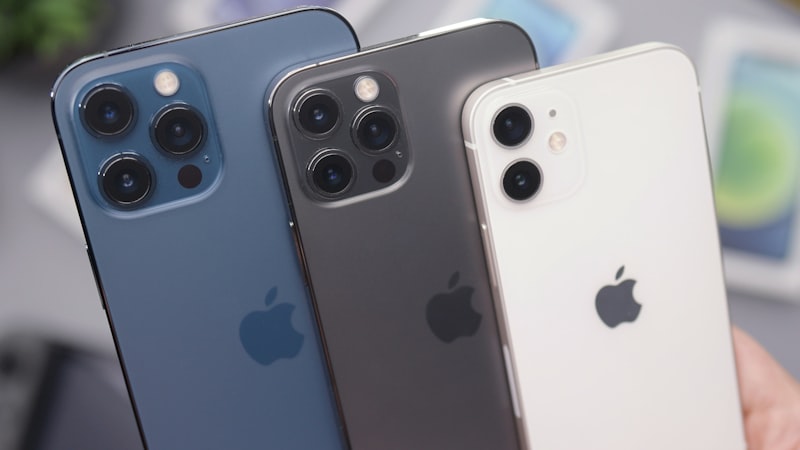
Early iPhones featured a single microphone primarily intended for phone calls. Its placement and capabilities were limited, focusing solely on capturing the user's voice while attempting to minimize background noise. As the iPhone's capabilities expanded to include video recording and voice memos, the need for improved audio fidelity became apparent. This led to the introduction of multiple microphones, strategically positioned around the device.
The addition of a second microphone, typically located on the top or rear of the iPhone, enabled rudimentary noise cancellation. By comparing the audio signals received by the two microphones, the iPhone could identify and filter out ambient sounds, resulting in clearer voice recordings. This was a crucial step in improving the overall audio quality of iPhone videos and voice memos, particularly in noisy environments.
However, the real breakthrough came with the introduction of more advanced microphone arrays and sophisticated audio processing algorithms. Modern iPhones now boast three or more microphones, meticulously placed to capture sound from different directions. This allows the iPhone to create a more accurate and immersive audio recording, capturing not only the user's voice but also the surrounding environment.
The key to this spatial audio capture lies in the iPhone's ability to analyze the time delays and amplitude differences between the audio signals received by each microphone. By processing this information, the iPhone can determine the direction and distance of sound sources, effectively creating a three-dimensional audio map of the surrounding environment. This information is then used to create a more realistic and immersive audio recording, capturing the nuances of sound that would be lost with a single microphone.
The benefits of this advanced microphone system are manifold. For video recording, it allows the iPhone to capture more realistic and immersive audio, enhancing the overall viewing experience. For voice memos and dictation, it improves accuracy and clarity, even in challenging acoustic environments. And for augmented reality (AR) applications, it enables the iPhone to create a more realistic and believable audio landscape, enhancing the sense of immersion.
Apple's pursuit of spatial audio extends beyond the iPhone's microphone system. As we explored in our analysis of display technology at iPhone View, Apple has also invested heavily in spatial audio playback technologies, such as AirPods with head tracking and personalized spatial audio. These technologies work in tandem with the iPhone's microphone system to create a truly immersive audio experience, both for content creation and consumption.
Looking ahead, the evolution of the iPhone's microphone array is likely to continue, driven by advancements in audio processing algorithms and the increasing demand for immersive audio experiences. One potential direction is the integration of beamforming technology, which would allow the iPhone to focus its recording capabilities on a specific sound source, even in a noisy environment. Another possibility is the use of artificial intelligence (AI) to further enhance noise cancellation and improve the overall audio quality of recordings. Apple may also explore integrating MEMS microphones with even higher signal-to-noise ratios for better performance in quiet environments. As with many other key components of the iPhone, the microphone array is also likely to become more power efficient, contributing to improvements in overall battery life. And as we've discussed at iPhone Evolve, these incremental improvements add up to compelling reasons to upgrade to newer generations.
In conclusion, the iPhone's evolving microphone array represents a significant advancement in mobile audio technology. By moving beyond basic voice capture and embracing spatial audio recording, Apple is positioning the iPhone as a powerful tool for content creation and consumption, paving the way for a more immersive and engaging audio experience.