The iPhone's Evolving Approach to Software-Hardware Integration
The iPhone's Evolving Approach to Software-Hardware Integration
Apple's control over both hardware and software has always been a key differentiator for the iPhone. While other manufacturers rely on off-the-shelf components and generic operating systems, Apple meticulously designs its own silicon and tailors iOS to take full advantage of its unique capabilities. This tight integration has only intensified over the years, leading to new features and performance improvements that would be impossible with a more fragmented approach.
Editor's pick: MagSafe iPhone cases on Amazon → As an Amazon Associate, this site earns from qualifying purchases.
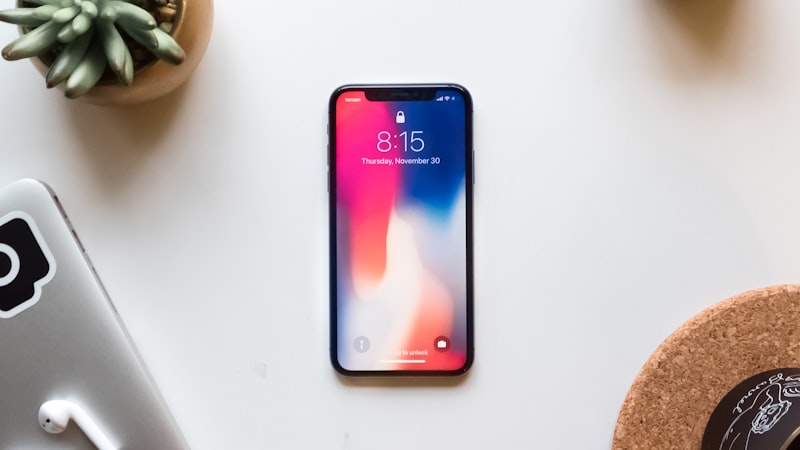
Custom Silicon: The Foundation of Integration
The journey began with the A4 chip in the original iPad and iPhone 4. This marked Apple's first foray into designing its own system-on-a-chip (SoC), moving away from relying solely on third-party processors. Since then, each generation of A-series and now M-series silicon has pushed the boundaries of performance and efficiency. More importantly, these chips are designed with specific software features in mind. For example, the Neural Engine, first introduced in the A11 Bionic, was specifically designed to accelerate machine learning tasks, enabling features like Face ID and real-time image processing. The Secure Enclave, a dedicated hardware security module, works in tandem with iOS to protect sensitive data.
This co-design philosophy extends beyond the main processor. Apple also designs custom image signal processors (ISPs), display controllers, and other specialized chips that are optimized for the iPhone's specific needs. This allows them to fine-tune performance, power consumption, and image quality in ways that wouldn't be possible with generic components.
Software Frameworks: Unlocking Hardware Potential
The hardware is only half the story. Apple's software frameworks are equally crucial for unlocking the full potential of its custom silicon. Core ML, for instance, provides a high-level API for developers to leverage the Neural Engine for machine learning tasks. Metal, Apple's low-level graphics API, allows developers to access the full power of the iPhone's GPU. These frameworks not only simplify development but also ensure that applications can take full advantage of the iPhone's unique hardware capabilities.
Furthermore, Apple has been increasingly focusing on creating specialized frameworks for specific hardware features. For example, the LiDAR scanner, introduced in the iPhone 12 Pro, is supported by SceneKit and ARKit, allowing developers to create augmented reality experiences that are tightly integrated with the hardware. Similarly, improvements to the camera system are often accompanied by updates to the Camera API, enabling developers to access new features like ProRes video recording and Cinematic Mode.
Future Directions: The Seamless iPhone
Looking ahead, Apple's commitment to software-hardware integration shows no signs of slowing down. Rumors suggest that Apple is working on even more custom silicon, including dedicated chips for connectivity and display management. This would allow them to further optimize performance and efficiency, while also reducing reliance on third-party suppliers. As we've explored in our analysis of display technology at iPhone View, advancements in display technology are heavily reliant on custom display controllers to manage refresh rates and power consumption.
The ultimate goal appears to be a truly seamless iPhone experience, where hardware and software work together in perfect harmony. This involves not only optimizing performance and efficiency but also creating new features and capabilities that are only possible through tight integration. The increasing focus on accessibility, as we've covered in our look at evolving accessibility hardware, highlights this commitment to ensuring that everyone can benefit from the iPhone's unique capabilities.
The Impact on the User Experience
This integrated approach has a profound impact on the user experience. It allows Apple to deliver features that are simply not possible on other platforms. From the smooth animations and responsive touch input to the advanced camera features and secure authentication, the iPhone's tight integration is evident in every aspect of the device. While some may argue that this limits customization and openness, it ultimately results in a more refined, reliable, and innovative user experience. As Apple continues to push the boundaries of hardware and software, we can expect even more exciting developments in the years to come, further solidifying the iPhone's position as a leader in the mobile industry.