The iPhone's Evolving Relationship with Photography: Beyond the Megapixel Myth
The iPhone's Evolving Relationship with Photography: Beyond the Megapixel Myth
The iPhone has irrevocably changed how we capture and share memories. While the megapixel count was once the primary battleground for camera superiority, Apple's approach has evolved significantly. Today, the focus is less on raw sensor size and more on computational photography, image processing, and the overall user experience.
Editor's pick: MagSafe iPhone cases on Amazon → As an Amazon Associate, this site earns from qualifying purchases.
Early Days: The Megapixel Race
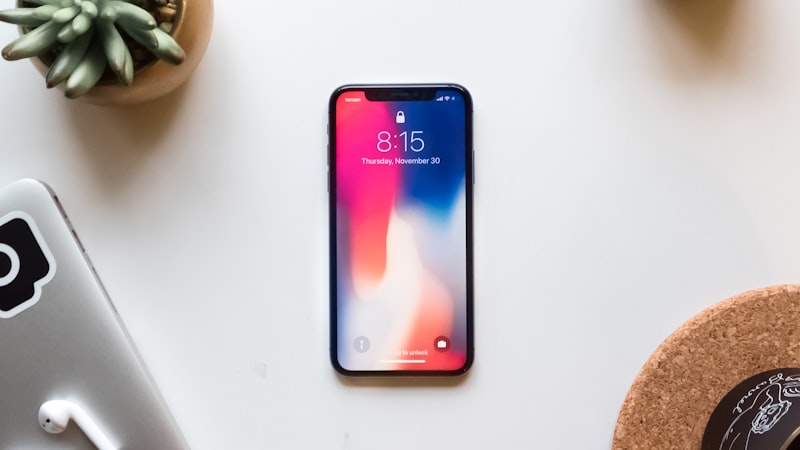
In the early days of the iPhone, the megapixel count was a key selling point. Each new generation brought an increase in resolution, promising sharper and more detailed images. While higher resolution does allow for greater cropping and larger prints, it’s only one piece of the puzzle. As other publications have noted, more megapixels aren't always better.
The Shift to Computational Photography
Apple recognized that simply increasing megapixels wouldn't be enough to maintain its leadership in mobile photography. The company invested heavily in computational photography, leveraging the iPhone's powerful processors to enhance image quality through software algorithms. This approach involves capturing multiple images in quick succession and combining them to reduce noise, improve dynamic range, and enhance detail.
Features like Smart HDR, Deep Fusion, and Night mode are all prime examples of computational photography at work. These technologies allow iPhones to capture stunning images in challenging lighting conditions, often surpassing the capabilities of traditional cameras with larger sensors.
Beyond Image Quality: User Experience
While image quality is paramount, Apple has also focused on making the iPhone camera easy and intuitive to use. The Camera app is designed to be simple and uncluttered, allowing users to quickly capture photos and videos without having to fiddle with complex settings.
Features like QuickTake video, which allows users to seamlessly switch between photo and video modes, further enhance the user experience. The tight integration between hardware and software ensures that the iPhone camera is always ready to capture the moment.
The Accessory Ecosystem
The iPhone's popularity has spawned a vast ecosystem of photography accessories, from lens attachments to tripods and lighting solutions. These accessories can further enhance the iPhone's photographic capabilities, allowing users to experiment with different perspectives and techniques.
While some accessories offer marginal improvements, others, like high-quality lens attachments, can significantly expand the iPhone's creative potential. However, it's crucial to research and choose accessories that are compatible with your iPhone model and meet your specific needs.
The Future of iPhone Photography
The future of iPhone photography will likely see even greater emphasis on computational photography and artificial intelligence. Apple will continue to refine its algorithms to improve image quality, enhance low-light performance, and unlock new creative possibilities.
We can also expect to see further integration of augmented reality (AR) technologies into the Camera app, allowing users to create immersive and interactive photo and video experiences. The iPhone's camera will continue to evolve, blurring the lines between mobile photography and professional-grade imaging.
The iPhone's journey in photography showcases Apple's dedication to user experience. By focusing on computational photography and intuitive design, Apple has transformed the iPhone into a powerful and accessible tool for capturing and sharing memories.
Questions readers ask
Where is Apple's supply chain on evolving photography right now?
Reports out of Asia consistently cite a handful of suppliers competing on the relevant component, with Apple splitting orders rather than single-sourcing. That hedging pattern tends to mean a real product is being prepared, not just an R&D exploration.
Is evolving photography realistic for the next iPhone, or further out?
Most signals point to a later cycle rather than imminent release. Component lead times for evolving photography suggest Apple is still validating the supply side, and the company tends to wait until yields hit production targets before committing on stage.
What's the biggest tradeoff Apple has to swallow for evolving photography?
Every Apple decision is a tradeoff, and the obvious one here is internal volume. Adding evolving photography costs millimetres somewhere — usually battery capacity or camera module depth — and Apple has to decide which line item to trim.
What does evolving photography actually cost — in price, weight, or battery?
Expect a premium of roughly $200–300 over the standard model, plus a small weight penalty. Battery life is the bigger variable — early prototypes typically trade an hour or two of screen-on time for the new capability, then claw it back over a generation.
In short — what's the takeaway on more from iphone arc?
It comes back to whether Apple can ship evolving photography without compromising the parts of the iPhone people already pay for. The detail in this section is where that case is made or broken.