The iPhone's Evolving Approach to Force Sensors: From 3D Touch to Solid-State Sensing
The iPhone's Evolving Approach to Force Sensors: From 3D Touch to Solid-State Sensing
Apple's history with force-sensitive input on the iPhone has been a story of experimentation, adoption, and eventual retreat. From the introduction of 3D Touch on the iPhone 6s to its quiet removal in subsequent models, the journey highlights the challenges of integrating complex hardware features into a device designed for intuitive user experience. However, the underlying need for richer interaction beyond simple taps and swipes remains, suggesting a future where force sensors, in a new form, could make a comeback.
Editor's pick: MagSafe iPhone cases on Amazon → As an Amazon Associate, this site earns from qualifying purchases.
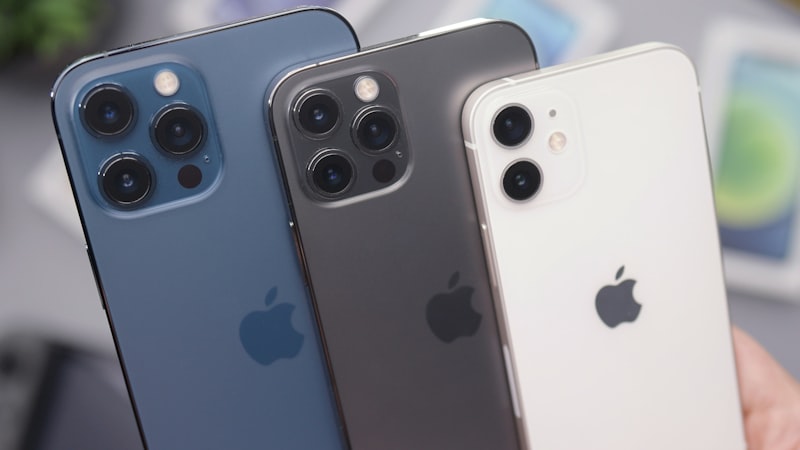
3D Touch, introduced in 2015, leveraged capacitive sensors integrated beneath the display to measure the amount of pressure applied by the user. This allowed for 'Peek and Pop' gestures, enabling quick previews of content and shortcuts to specific app functions. While innovative, 3D Touch suffered from several limitations. User discoverability was a major hurdle, as many users were unaware of the feature's existence or how to effectively utilize it. The lack of visual cues to indicate pressable areas contributed to this issue. Furthermore, the added complexity and cost of the 3D Touch module impacted device thickness and potentially battery life.
With the iPhone XR in 2018, Apple replaced 3D Touch with Haptic Touch, a long-press gesture accompanied by haptic feedback. This simplified approach, while less nuanced than 3D Touch, provided a more consistent and discoverable interaction method. All subsequent iPhones have adopted Haptic Touch, signaling the end of dedicated pressure-sensitive hardware. However, Apple's research and development efforts in force-sensing technology have not ceased. Patents filed in recent years point towards a renewed interest in solid-state sensing solutions.
Solid-state force sensors offer several advantages over the capacitive approach used in 3D Touch. These sensors, often based on piezoelectric or strain gauge technology, can be integrated directly into the device's chassis or components, eliminating the need for a dedicated layer beneath the display. This allows for a thinner and lighter device design, aligning with Apple's long-standing pursuit of miniaturization. As we explored in our analysis of display technology at iPhone View, minimizing display stack thickness is crucial for achieving optimal brightness, color accuracy, and power efficiency.
Beyond space savings, solid-state sensors offer improved durability and reliability. Unlike capacitive sensors, which can be susceptible to damage from moisture or physical impact, solid-state sensors are more robust and resistant to environmental factors. This is particularly important for a device like the iPhone, which is designed for everyday use in diverse conditions. Furthermore, solid-state sensors can be strategically placed throughout the device to detect pressure applied to different areas, enabling a wider range of interaction possibilities.
Imagine an iPhone where squeezing the sides activates specific functions, such as launching the camera or adjusting the volume. Or a display that responds differently based on the pressure applied by the user's fingers. These are just a few examples of the potential applications of solid-state force sensors. The challenge lies in developing intuitive and discoverable user interfaces that effectively leverage this technology. Apple's expertise in haptic feedback, as explored in our previous analysis of haptics evolution, will be crucial in providing users with clear and consistent cues regarding the device's response to their input.
Reports from the supply chain suggest that Apple is actively exploring solid-state force-sensing solutions from various component manufacturers. While there is no concrete timeline for their integration into future iPhones, the continued investment in research and development indicates a strong belief in the potential of this technology. The evolution of force sensors on the iPhone is a testament to Apple's commitment to innovation, even when initial attempts do not fully meet user expectations. The future of iPhone interaction may very well be shaped by a new generation of pressure-sensitive technology, seamlessly integrated into the device's design and enhancing the user experience in subtle yet significant ways. The implications for industrial design could be profound, potentially allowing for more streamlined and minimalist forms, as features previously requiring physical buttons are migrated to pressure-sensitive zones.