The Evolving iPhone Display: Balancing Durability and Visual Fidelity
The Evolving iPhone Display: Balancing Durability and Visual Fidelity
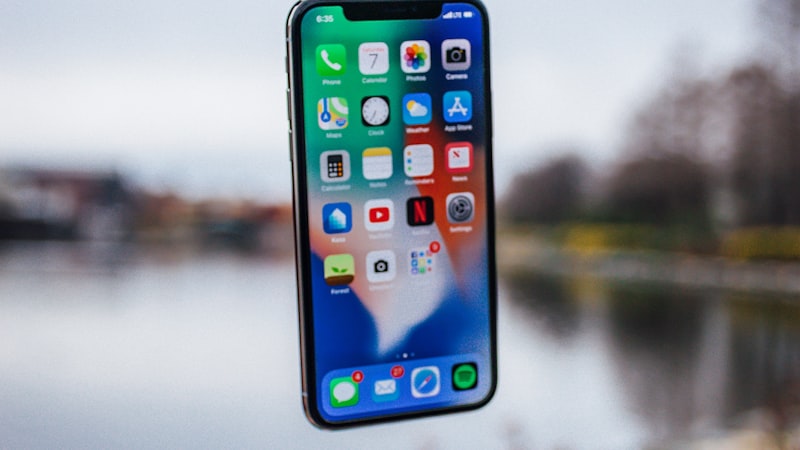
The iPhone display has consistently been a focal point of innovation, evolving from early LCD panels to the vibrant OLED technology found in current models. However, this evolution isn't solely about visual improvements. Apple must continually balance visual fidelity with durability – a complex equation involving material science, manufacturing processes, and user expectations.
Editor's pick: MagSafe iPhone cases on Amazon → As an Amazon Associate, this site earns from qualifying purchases.
Scratch Resistance: A Persistent Challenge
Scratch resistance has always been a concern for smartphone users. Early iPhones relied on chemically strengthened glass, a technology that has steadily improved over the years. Corning's Gorilla Glass, a mainstay in the industry, has undergone numerous iterations, each promising enhanced scratch and impact resistance. Apple has collaborated closely with Corning, even investing significantly in their research and development.
Despite these advancements, achieving perfect scratch resistance remains elusive. Mineral hardness is the key factor. Most glass, even chemically strengthened varieties, has a hardness lower than common materials like sand, which contains quartz. This means that microscopic scratches are almost inevitable with regular use. The challenge for Apple is to minimize the visibility and impact of these scratches.
Impact Protection: Absorbing the Blow
Impact protection is equally critical. A shattered screen is a common and costly problem. While scratch resistance focuses on surface abrasions, impact protection addresses the ability of the display to withstand drops and collisions. Thicker glass provides better impact resistance, but also adds weight and bulk, detracting from the iPhone's sleek design.
Apple has explored various approaches to improve impact protection. These include using different glass compositions, incorporating shock-absorbing layers within the display stack, and optimizing the structural design of the iPhone itself to distribute impact forces. The Ceramic Shield front cover, introduced with the iPhone 12, represents a significant advancement in this area. By infusing ceramic crystals into the glass matrix, Apple increased the material's hardness and resistance to cracking.
Visual Fidelity: The Pursuit of Perfection
While durability is paramount, Apple also prioritizes visual fidelity. Factors like color accuracy, brightness, contrast ratio, and viewing angles all contribute to the overall user experience. OLED displays offer significant advantages in these areas compared to LCDs, delivering deeper blacks, higher contrast, and wider color gamuts. Apple's Super Retina XDR displays, found in recent iPhone models, leverage OLED technology to deliver exceptional image quality.
The introduction of ProMotion technology, explored in our analysis of display technology at iPhone View, further enhances the viewing experience by dynamically adjusting the refresh rate up to 120Hz. This results in smoother scrolling, more responsive animations, and improved overall fluidity.
The Trade-Offs and Future Directions
The design of the iPhone display involves a constant balancing act between durability and visual fidelity. Increasing scratch resistance might compromise impact protection, and vice versa. Similarly, enhancing visual performance could add complexity and cost to the manufacturing process.
Looking ahead, Apple is likely to continue exploring new materials, manufacturing techniques, and display technologies to further improve the iPhone display. This could involve experimenting with alternative glass compositions, incorporating flexible displays, or developing new coatings that offer both superior scratch and impact resistance. Ultimately, the goal is to create a display that is not only visually stunning but also incredibly durable, providing users with a seamless and worry-free experience.
Questions readers ask
What's the biggest tradeoff Apple has to swallow for evolving display durability fidelity?
Every Apple decision is a tradeoff, and the obvious one here is internal volume. Adding evolving display durability fidelity costs millimetres somewhere — usually battery capacity or camera module depth — and Apple has to decide which line item to trim.
What does evolving display durability fidelity actually cost — in price, weight, or battery?
Expect a premium of roughly $200–300 over the standard model, plus a small weight penalty. Battery life is the bigger variable — early prototypes typically trade an hour or two of screen-on time for the new capability, then claw it back over a generation.
How does evolving display durability fidelity change the upgrade calculus for existing owners?
Existing owners weigh evolving display durability fidelity against the upgrade they were already planning. If the feature is meaningful for daily use, it pulls forward upgrades by about a year; if it is novelty, it shifts nothing.
Does evolving display durability fidelity require new developer APIs, or can existing apps adapt?
Apple historically ships a quiet developer API the year before the hardware lands, so existing apps that follow human-interface guidelines should adapt with modest work. Apps that hard-code layouts will need updates.
In short — what's the takeaway on scratch resistance: a persistent challenge?
It comes back to whether Apple can ship evolving display durability fidelity without compromising the parts of the iPhone people already pay for. The detail in this section is where that case is made or broken.